Tuesday, July 26, 2011

British Empire Stamps-India-George the 5th definitives.Some varieties and overprints

Illustrated below are George the 5th Indian Empire Stamps showing some of the printings, varieties and overprints issued during his reign.
                 
The four anna postage stamp was printed in two colours. Originally in an deep olive green (illustrated here) in 1911 then in a sage green in a later printing  with the altered legend "postage and revenue". the earlier exists overprinted "service" as the example shows.


The half anna of the same series shows some variety in shades and printing,The earlier printing of 1912 has the legend "postage and revenue". The later printing only "postage". The earlier printing is also known to exist with a quarter anna overprint (illustrated below)


The one and a half anna of the first issue also exists overprinted "service" with the modified value of one anna as illustrated here.

The values in the first issue are 3 pies, half anna,one anna,one and a half annas, 2 annas, 2 annas and 6 pies (printed in blue and orange), 3,4,6,8,12 annas. Some of these values are illustrated below.




Monday, July 18, 2011

A Small Page from an Old Album Showing Postage Stamps Of Italian East Africa

Illustrated below is a small selection of Italian postage stamps issued for the colony of East Africa. Below the page are two details of four of the stamps. The two stamps showing Italian soldiers holding military standards and the eagle stamp were overprinted "British Occupation" with new values by South African forces when they captured the colony during the Second World War. On orders from London most of these were never used and destroyed and are now quite rare.


A Page from an Old Postage Stamp Album of Italian Colonial Stamps

Below is a small page of postage stamps issued in Eritrea when the country was an Italian colony.  Details are shown below the page of  five of the stamps.


Friday, July 15, 2011

Paintings from a trip to Lightning Ridge

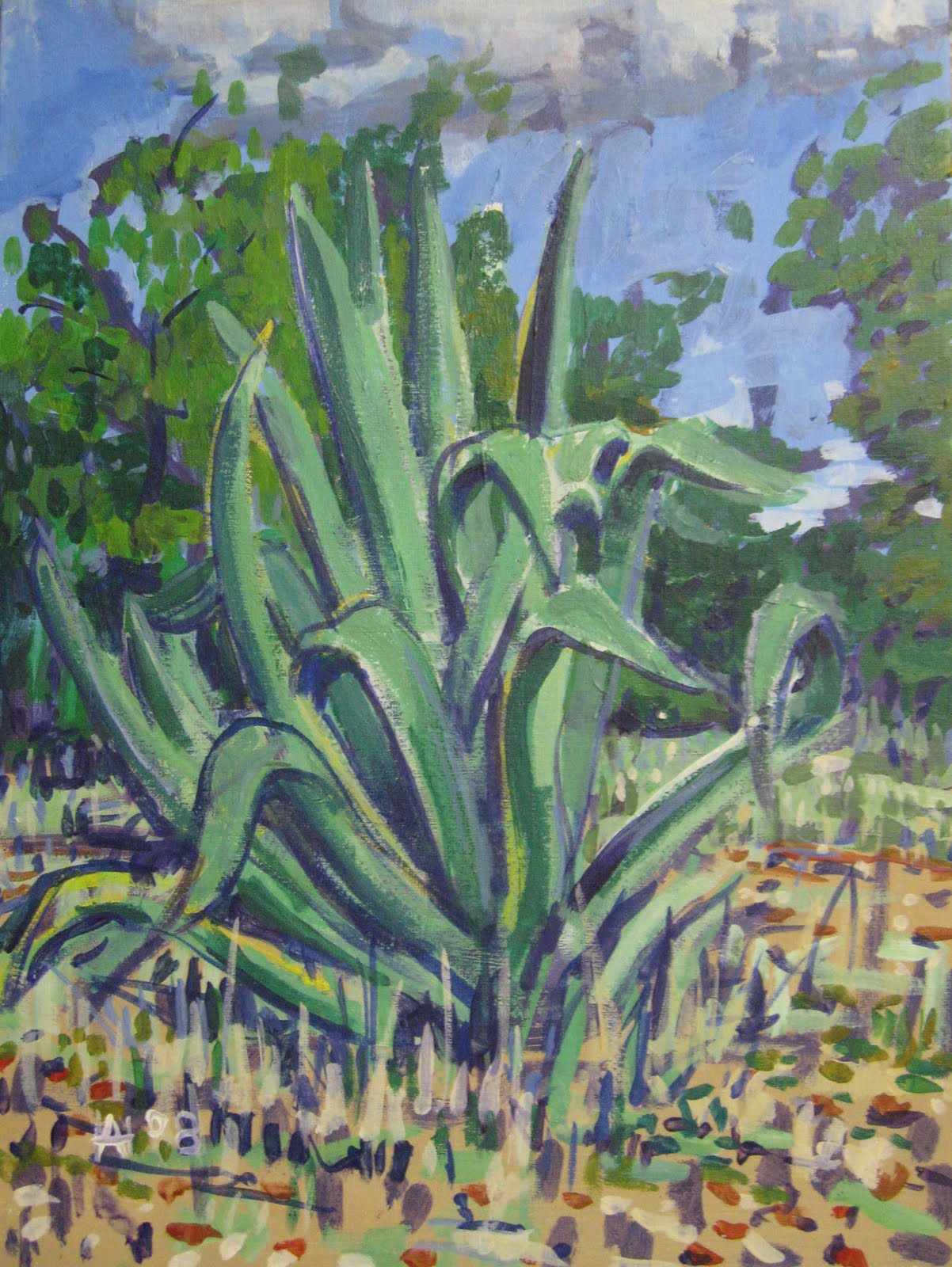
In 2008 I was lucky enough to be able to go on a trip to Lightning Ridge in the north west of  New South Wales. I produced sketches in acrylic paint on canvas board and took photographs. Some of these works are illustrated below with more finished works done in the studio.


A frequent sight in Lightning Ridge are the corrugated iron water tanks. Lightning Ridge is dry for much of the year and tanks are a necessity. They are usually the only thing left when a particular mining claim has been abandoned.
Lightning Ridge is famous as an opal mining town and evidence of mining is visible in most parts of the area. Below is a scene of an area that has been mined for opal. The white hillocks are the spoil from diggings  called "mullock heaps" locally.


Below is a more finished work in oil on canvas of one of the sketches in acrylic on canvas board above. With very clear skies, bright sunlight and with a predominance of whites from the claystone that underlies Lightning Ridge a reflected light is produced that affects the shadows making for some very intense blues even in the darker areas of the landscape. 


One of the well known landmarks in Lightning Ridge is a local church made of corrugated iron the building material of choice in times past. Painted in oils on canvas.


Two of the abandoned vechicles that are another feature of the Lightning Ridge landscape
One of the new concrete bridges on the road into Lightning Ridge. While "the Ridge" is very dry most of the year they sometimes experience severe floods that washed away the old wooden bridges isolating the town.


Oil Pastel Sketches of Houses By the River


I live very close to a park with a river running through it. As I am very often short of time in which to produce art works I decided to work in a way that took this into account. Painting in oils can be a fairly time consuming practice so I bought some cheap oil pastels and an A4 sketchpad and walked to the local park to spend a couple of hours sketching local scenery. (See an early post on this blog for details of techniques and materials). Illustrated above and below are some of the more recent works.


Thursday, July 14, 2011

Two Italian Postage Stamps issued during the Second World War

Below are two illustrations of Italian postage stamps that will be instanly recognised by most people. They show Hitler and Mussolini with the caption "Two Peoples One War" The first illustration is of a postage stamp issued during the Italian Occupation of Libya.


The Australian George the 6th 5 Pound Note

Below is an illustration of the George the 6th 5 Pound note issued between 1941 and 1948. Below are the specifications for the note.
 Obverse George VI & Coat of Arms
Reverse Commerce Scene
Signatories H. T. Armitage, Governor, Commonwealth Bank of Australia
S. G. McFarlane, Secretary to the Treasury
Size 180.34mm [width], 78.74mm [height]
Composition: Paper – 77 gsm
WatermarkCaptain Cook in centre oval
’FIVE’ behind each signature
Mintage 50,919,000
Serial Numbers Prefix letter R over numeral
R / 34 081001 to S / 84 1000000


The George the 6th Australian 10 shilling Note

Below is an illustration of the Australian George the 6th 10 Shilling note. This was the last series in the George the 6th 10 shillings and were only issued between 1952 and 1953. When Queen Elizabeth the Second came to the throne the design of the note was changed (see this blog) Below are the specifications for the note
 Obverse George VI
Reverse Manufactures
Signatories H. C. Coombs, Governor, Reserve Bank of Australia
Roland Wilson, Secretary to the Treasury
Size 137.16mm [width], 76.20mm [height]
Composition Paper – 77 gsm
Watermark Captain Cook in left oval
’HALF’ behind each signature
Mintage 74,648,000
Serial Numbers Prefix A or B over numeral A/75 000001 to B/49 64800


Wednesday, July 13, 2011

3 Pages of old Japanese Postage Stamps

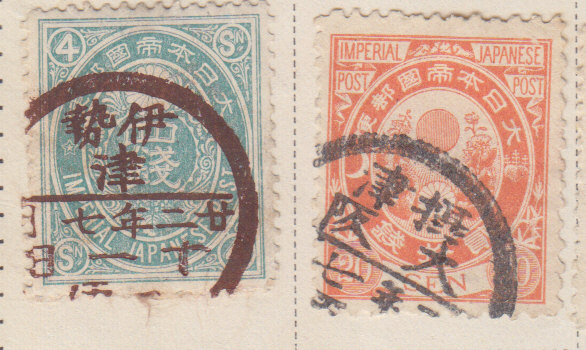
I like Japanese postage stamps for their design and for the cancels they use on stamps. I think sometimes the stamps are more attractive with the cancels than mint. If they don't obscure too much of the stamp the cancels add another dimension by their calligraphy. Below are some illustrations of older Japanese postage stamps with some details of individual stamps


An Australian 1922 George 5th Penny

Below are the obverse (face) and reverse illustrations of a 1922 Australian penny. The condition is somewhat better than average, with no major marks, scratches or indentations. It does show handling wear and normally these pennies are graded by looking at the number of pearls and diamonds visible in the headband of the crown. 8 pearls and all diamonds clearly visible being an indication of fineness


Australian Silver Coins-Sixpences Minted in America

Below are two Australian sixpences minted in America during the Second World War. The reigning monarch was George the 6th. The sixpences were minted at the Denver mint (indicated by the small capital D below the Australian Coat of Arms)